

A magnetic pulse, not a drug
A coil rests against your scalp and sends magnetic pulses to a region of the brain involved in mood. Nothing is injected and nothing is swallowed. You stay awake, sitting in a chair, for the whole session.
TMS is an FDA-cleared, non-drug treatment for depression that hasn’t improved with medication. Search a city or ZIP to see which clinics near you offer it — with the phone number, hours and website for each, so you can call and ask what you need to know.

FDA-cleared
for major depression

20–40 minutes
a session, sitting in a chair

No sedation
you drive yourself home

30–36 sessions
over six to nine weeks
The basics
Transcranial magnetic stimulation. It is an outpatient procedure, not a hospital admission and not a medication — here is what that actually means.
A coil rests against your scalp and sends magnetic pulses to a region of the brain involved in mood. Nothing is injected and nothing is swallowed. You stay awake, sitting in a chair, for the whole session.
A standard course runs roughly 30 to 36 sessions over six to nine weeks. There is no anaesthesia and no sedation, so you drive yourself home afterwards and go back to your day.

Most insurers authorise TMS only after a documented history of antidepressants that did not work. It is also used off-label for other conditions, on much thinner evidence.
What to expect
The procedure is far less dramatic than the name suggests. Most of what people are afraid of does not happen.
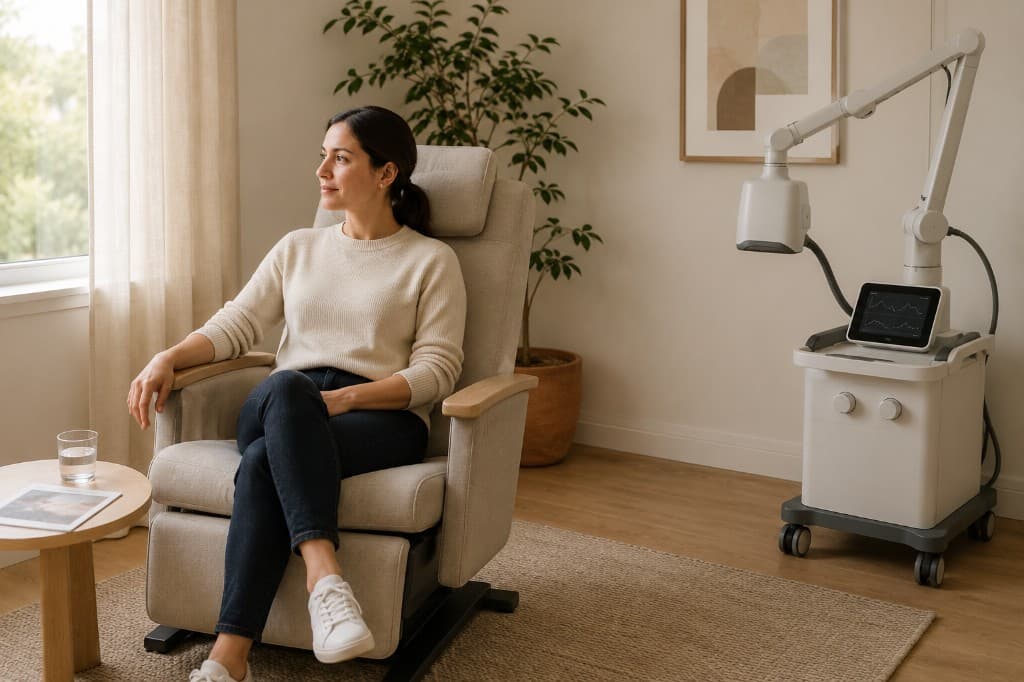
No gown, no bed, no sedation. Most TMS rooms look closer to a dentist’s office than a hospital.
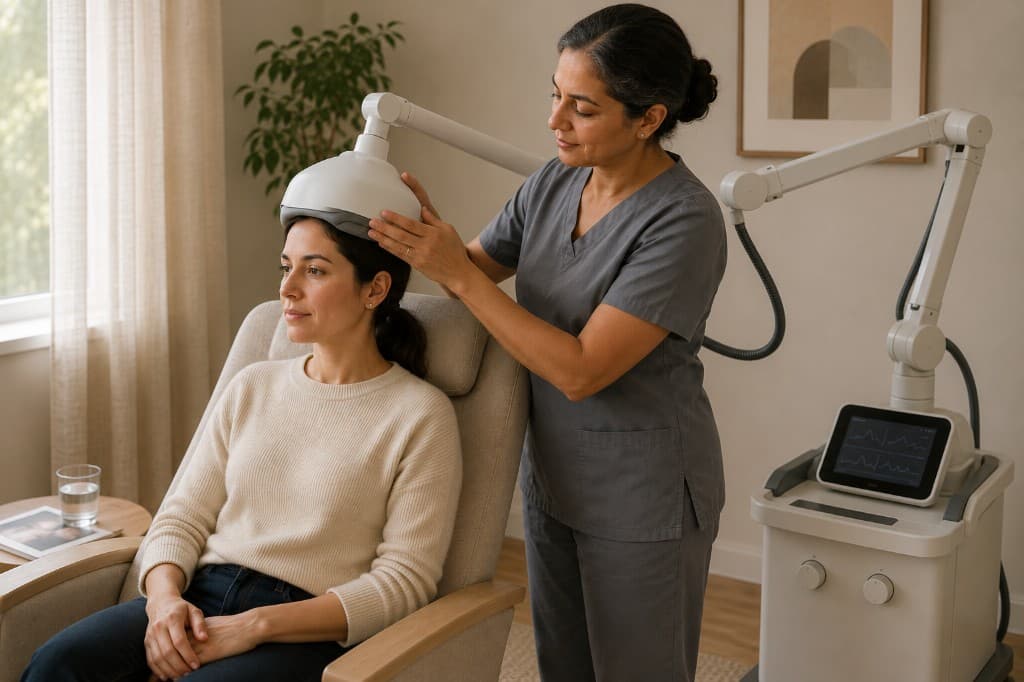
A technician positions it and stays in the room. You hear a tapping sound and feel tapping on your scalp.

No recovery time. People drive themselves home, go back to work, pick the kids up.
Three steps
There is no booking on this site — the phone number is the thing. Three steps, and the first two cost nothing.
 1
1Search your city or ZIP. Every clinic that serves the area appears sorted by distance, with its hours and a phone number.
 2
2Call the clinic you want and book a consultation. Worth asking on the same call whether they are taking new patients and what a full course costs.
3Your insurer will want a diagnosis and a record of the medications that did not work — the clinic files it, you supply the history.
Common questions
Shortcuts
If a psychiatrist has already named a device, a protocol or a diagnosis, start there and we’ll show you which clinics near you run it.
BY CONDITION
BY DEVICE

BY PROTOCOL

COST & COVERAGE